
WASHINGTON probably never had a more popular citizen than the late Col. Ed. Hay. When it was reported that he was dead, men looked at each other in wonder and doubt. “Ned Hay dead—dead?” they stammered. “Ned Hay—God, man, you're mistaken! Hay isn't dead— not Ned Hay.”
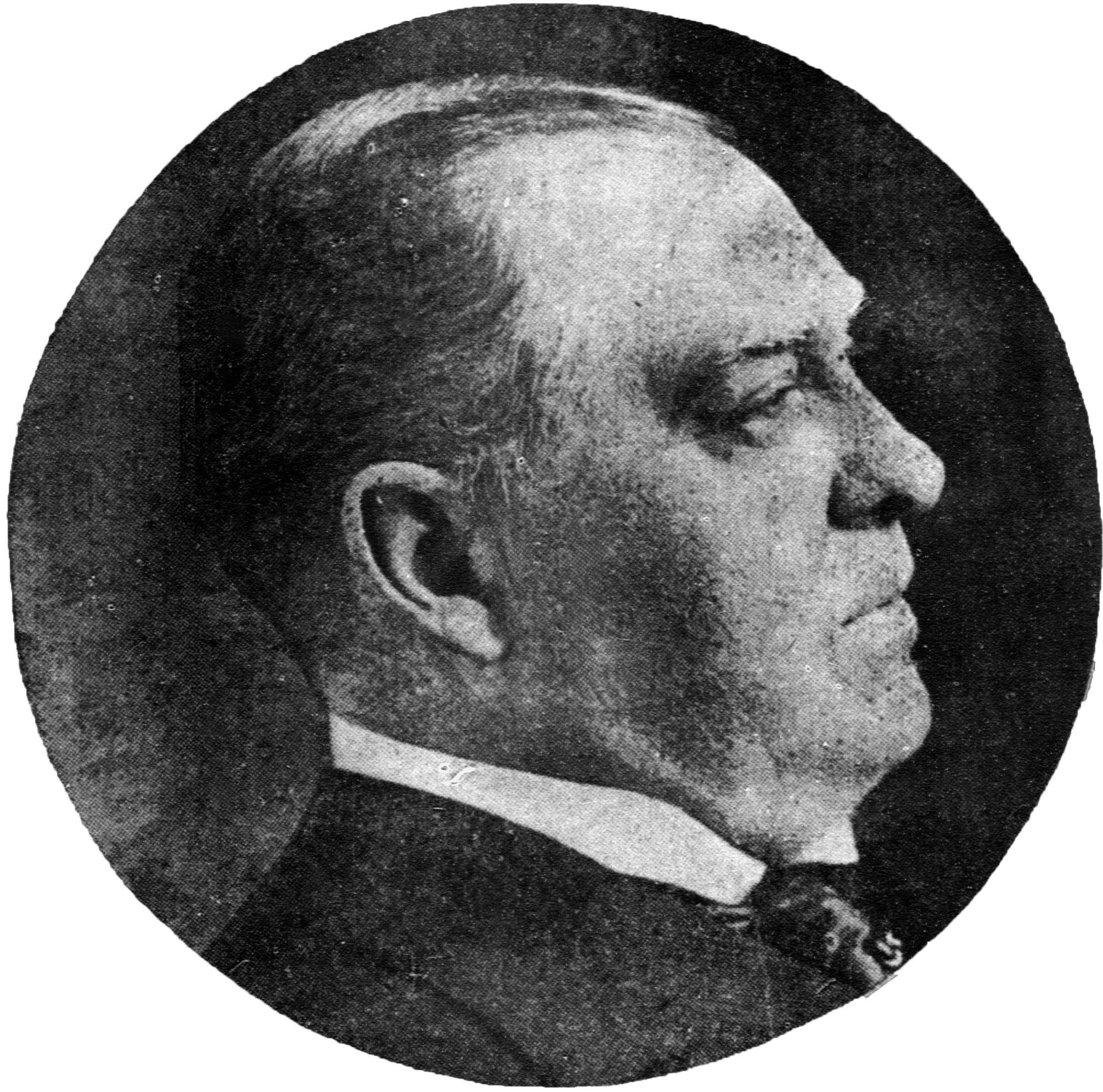
Author of “The Vivians,”
Who Was One of the Most Popular Men in Washington.
It seemed to all who had known him that it could not be possible that he was gone forever, nevermore to be seen on the streets of Washington, at the banquet board, in the lodge room. Men could hardly believe that all his magnificent strength of mind and body, his fervid imagination, his buoyant sympathy, his exhaustless vitality, his brilliant grace, his jubilant spirits had been silenced forever.

Published “The Vivians.”
And men were right. Ned Hay is not dead; he has left behind him a monument by which he will live again in the hearts and minds of all who knew him. There has just issued from the press a book in which this warm-hearted, charitable, and pure-minded friend of all mankind reveals himself as he really was.
The book is a splendid monument to the memory of “lovable ‘Ned’ Hay.” All who knew him—and he was known and loved and respected from the Atlantic to the Pacific—will hear the man speak again as they read the pages of this sparkling and interesting novel.
It is morally wholesome from the first page to the last. This purlty of tone, however, does not make the story one Whit less full of human and heart interest than if the characters were all hardened sinners, instead of sane and healthy human beings
“Ned” Hay is revealed in “The Vivians” in several other ways beside the general tone of human sympathy and charity which exhale like the perfume of sweet flowers from its every page.
In addition to being a lawyer, orator, poet, after-dinner speaker of national repute, and Shakespearean scholar, “Ned” Hay was a handwriting expert and an enthusiastic fraternity man. Both of these are brought into the story which he has left. The order of the Elks, the order which he served and strengthened, which he saved twice from dissension, and of which he was thrice elected grand exalted ruler, is prominently mentioned the story of “The Vivians.”
Plot of the Story.
The plot and the chief interest of the story depend upon the question of handwriting; and the happy ending is brought about by the decision of Paul Pennington, a handwriting expert.
May Manning, the central character in the story, causes considerable gossip in the little Maryland village where she is sent to school, because of the fact that her mother is known to be an actress and nothing what-ever is known of her father. May shows her natural ability as an actress, and at the same time surprises the school teacher one day by giving a living illustration of her history lesson.
Billy Green, a farmer's lad, reads the lesson: “the During the battle a young cannoneer was shot down, and his piece was about to be taken by the enemy when his wife, Molly Pitcher, seized the rammer, loaded the cannon, and fired with fatal effect.”
“There,” she said, after the laughter and applause of the children had somewhat subsided, “I know there was never a more effective lesson than that, and (looking up at the teacher with just a little courage), if you please, sir, I feel quite sure they won't forget it ”
Study of Handwriting.
“ ‘I, too,’ affirmed the professor, ‘will not forget it. You are indeed an actress, and I rather like your way of teaching.’”
The professor is Paul Pennington, handwriting expert, and he says to his pupiis while he is giving them a lesson in writing: “Your handwriting is your trademark. I study it until I know its every feature, as I do the features of your face, and when I see your writing upon the papers I do not have to look at the name to know whose it is, as immediately I can say, ‘That is May Manning's,or That is Billy Green's.’ To me it is a wonderful study, while to you It may be simply inexpressive lines forming letters and words.”
It is by Paul Pennington's ability to trade resemblances and differences in handwriting that May at last discovers her father, and a maze of tangled relationshipe is straightened out.
Mrs. George Vivian, wife of the wealthy and philanthropic citizen, George Vivian, forms a violent dislike to May and to her actress mother. She is accused of having written a number of anonymous letters, which are received by various persons, villfying May and her mother. But it is later proven that these letters were written by another party. Mr. Pennington is also called upon to decide a question of handwriting in a will.
A Fascinating Work.
“The examination and comparison of handwriting,” says the author, “is a most fascinating occupation, especlally when characters mutely and undeniably express a statement of facts upon which to build a, complete structure of an opinion. So Pennington's task was an absorbing pleasure, from which he did not emerge until the day was dim, and the custodian was anxiously waiting to close the record room.”
One morning Mr. St. Clair receives the following anonymous note:
“Watch your wife. She needs your eye. Her New York trips keep her far in advance of the modest ideas of our quiet little town, and her orgies are the talk of Christian women. She has her tow-line around the rector of St. Clement's and will land him, with several others. You are blind. She keeps you so. I pity you, you dear old man. Vigilance should be your motto.
A SYMPATHIZER.”
But most of the characters in the book are not the kind who would try to make trouble by writing anonymous letters. May Manning is a bright, pure, and sweet girl who is loved by all; her mother proves to be a noble and true woman; Davy Burton ls a kind-hearted old man, willing to sacrifice even his life to help others; Charles Vivian, although rector of St. Clement's, proves that he can be a “fighting Christian” when the occasion demands it, and his brother George is a whole-souled, lovable fellow.
The reader of “The Vivians” will be sorry to lay down the finished book, and he will thank good-hearted and generous “Ned” Hay for the bright and cheerfu! picture of life which he gave to the world before he left it.