Douglass, Frederick, diplomatist; born in Tuckahoe, Talbot co., Md., in February, 1817; was a mulatto, the son of a slave mother; lived in Baltimore after he was ten years of age, and secretly taught himself to read and write. Endowed with great natural moral and intellectual ability, he fled from slavery at the age of twenty-one years, and, going to New Bedford, married, and supported himself by day-labor on the wharves and in workshops. In 1841 he spoke at an anti-slavery convention at Nantucket, and soon afterwards was made the agent of the Massachusetts Anti-slavery Society. He lectured extensively in New England, and, going to Great Britain, spoke in nearly all the large towns in that country on the subject of slavery. On his return, in 1847, he began the publication, at Rochester, N. Y., of the North Star (afterwards Frederick Douglass's Paper).
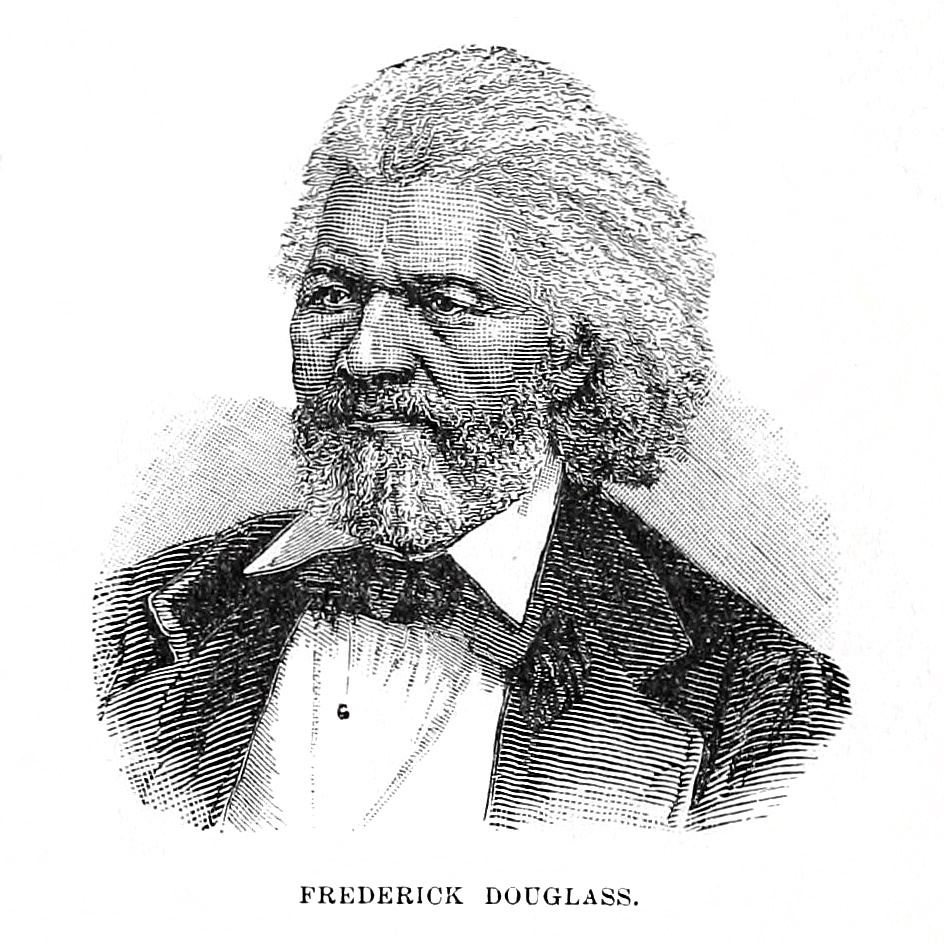
In 1870 he became editor of the National Era at Washington City; in 1871 was appointed assistant secretary of the commission to Santo Domingo; then became one of the Territorial Council of the District of Columbia; in 1876-81 was United States marshal for the District; in 1881-86 was recorder of deeds there; and in 1889-91 was United States minister to Haiti. He was author of Narrative of My Experiences in Slavery (1844); My Bondage and My Freedom (1855); and Life and Times of Frederick Douglass (1881). He died near Washington, D. C, Feb. 20, 1895.